
Can Loud Events Temporarily Affect My Hearing Test Results?
If you’ve ever left a Bruins game at TD Garden and noticed everything
By: susan1227 | September 21, 2026
If you’ve ever left a Bruins game at TD Garden and noticed everything sounded muffled on the way to the Orange Line, you know the feeling. Voices may seem farther away, and familiar noises might seem duller than they did before the game.
Most of the time, you go home, get some sleep and barely think about it the next morning. Having a hearing test on the calendar, though, gives you a reason to think about what your ears were exposed to the night before.
Concerts, sporting events and other loud places can leave your hearing different for a short time afterward.
That doesn’t mean you need to avoid making plans before every appointment. It does mean that a particularly loud night and a hearing test scheduled close together are worth considering when you plan your week.
At a concert, sporting event or other loud venue, your ears are handling high sound levels for much longer than they would during a typical conversation. Tiny sensory cells inside the cochlea respond to those noises and pass information to the auditory nerve.
After several hours of loud noise, those cells may respond less strongly for a while. When you leave, noises may seem muffled or quieter than they did earlier.
You might also notice ringing or a plugged feeling in your ears. Volume and time both make a difference. An entire evening near loudspeakers puts more strain on the ears than a few minutes of noise.
Your hearing may return to its usual level after spending some time in quieter surroundings. Repeated exposure can also damage sensory cells in the inner ear, and those cells don’t grow back once they’re damaged.
Noise exposure adds up while you’re at an event. Your ears can spend more time around moderate levels than they can around very loud sound.
A three-decibel increase represents a doubling of noise, so even a small change in the number can mean more exposure. For example, 88 decibels carry twice the sound energy of 85 decibels.
An event rarely stays at one volume from beginning to end. The crowd may get louder during certain moments, music may play between periods or you may move closer to a speaker.
Those louder stretches all count toward the noise your ears receive over the course of the event. This is why the length of the event matters along with how loud it gets.
Concerts aren’t the only events where your ears may be around high sound levels. Hockey and basketball games can get especially loud when the crowd reacts, music comes over the arena speakers or an announcement is made.
Fireworks are different because the sound arrives in sudden, intense bursts rather than staying at a similar level for hours. Festivals may keep you around amplified music and large crowds for much of the day.
Motorsports and air shows bring you close to powerful engines, while parades may include marching bands, sirens and speakers. Weddings, dances and parties can also be loud, particularly when your table or seat is close to the system.
Changes after loud noise aren’t always as obvious as ringing or muffled hearing. You may notice slight differences once you’re back in a quieter place:
Noise can temporarily reduce the sensitivity of the inner ear, causing your hearing thresholds to rise. As the ear recovers, those thresholds may return to their previous levels within several hours or over the next day or two.
If noise damages sensory hair cells in the cochlea, some of that change may remain. The loss may affect certain frequencies more than others, which means you could still hear plenty of noises while missing specific parts of speech.
An audiogram measures each frequency separately, so an audiologist can compare those results with an earlier test when one is available.
Quiet time before a hearing test is about keeping your sound exposure low. You can still talk with people, watch television at a comfortable volume or go about a normal morning.
The bigger concern is going from one loud setting directly into the testing booth without much time in between. That includes noise you might not think about because it’s part of your routine.
A loud commute with the windows down, earbuds turned up on the train or time around machinery all add more sound before the appointment. Giving your ears a quieter stretch beforehand keeps those exposures out of the hours leading up to your test.
After a concert or another noisy event, try to leave some space between the event and your appointment.
Audiologists often recommend avoiding loud noise for about 12 to 24 hours before a hearing test. That gives a temporary adjustment in hearing more time to wear off before your thresholds are measured.
You may need more time if your ears still feel different the next day. Ringing, muffled sound or changes in how you hear certain pitches suggest your hearing hasn’t returned to its usual level yet.
If the appointment is already scheduled, tell your local audiologist when the noise exposure happened and how long it lasted. They can decide whether to test that day or reschedule.
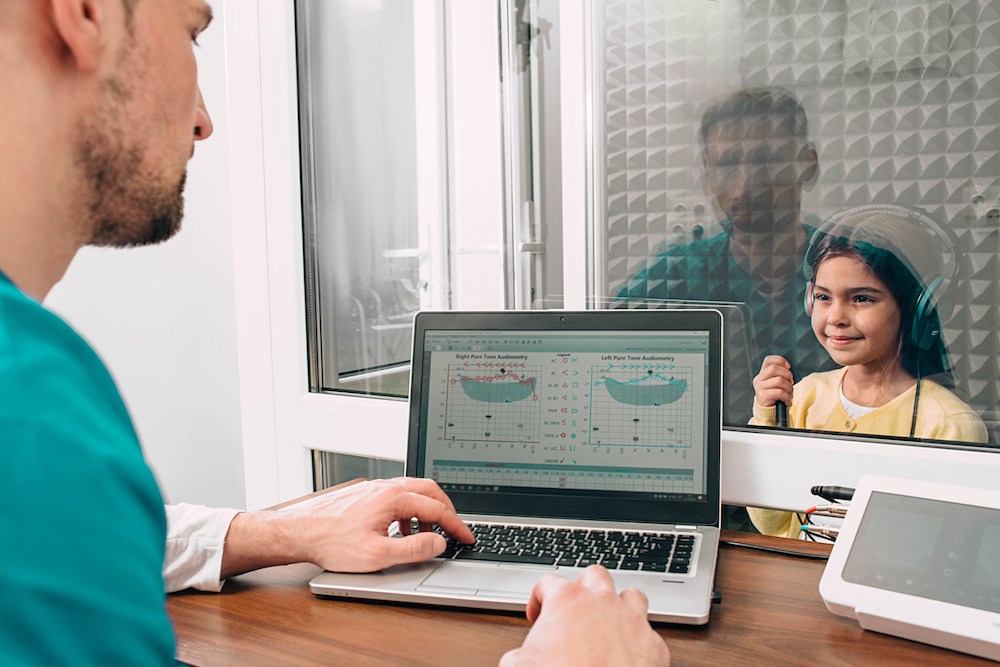
During a hearing test, you’ll hear tones at different pitches and volumes through headphones or small earphones. Your audiologist lowers the volume until each tone becomes difficult to hear, then records the softest level you respond to consistently.
Those measurements are called hearing thresholds. They’re plotted on an audiogram, which shows your results for each ear across low, middle and high frequencies.
Speech testing checks what happens when you listen to actual words instead of tones. One part finds the lowest volume where you can recognize speech.
Another asks you to repeat a list of words presented at a comfortable volume.
The percentage you repeat correctly is recorded as your word recognition score. This separates your ability to detect sound from your ability to recognize speech clearly.
You don’t have to skip concerts, games or other loud events to think about your hearing. A few things you can do while you’re there include:
Include things that may not seem directly related, like ear pain, drainage, pressure, dizziness or recent ear infections. Bring your current medications and any hearing devices you already use.
You don’t need to study for a hearing test or try to respond perfectly during it. Wear your glasses if you need them for forms or instructions, and bring your insurance information if the clinic requests it.
Arriving a few minutes early also gives you time to handle paperwork before testing begins.
If you were around a loud noise before your appointment, give your audiologist the details rather than trying to decide for yourself whether it matters. Questions you might ask include:
You don’t need to plan your whole week around a hearing test. Just give some thought to where you’ve been and how loud it was in the day or two beforehand.
If you spent the night at a concert, game or another loud event, tell your audiologist. That information belongs in the conversation when you sit down for your appointment.
When you come to Holden Audiology Center in Woburn, tell us what your ears have been around lately and anything you’ve noticed since.
We’ll take that into account during your hearing evaluation and answer any questions that come up along the way. Call us at (781) 347-6227 to schedule an appointment.
Tags: audiogram, faqs, hearing test results
If you’ve ever left a Bruins game at TD Garden and noticed everything
By: susan1227 | September 21, 2026
One day you’re hearing fine, and the next everything sounds like
By: susan1227 | April 22, 2026
Can you reverse hearing loss? The question itself tells you a lot about
By: susan1227 | February 20, 2026